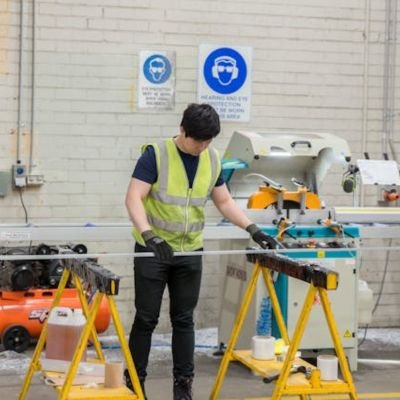

The positive side of the story is that a contemporary LMS for manufacturing (Learning Management System) is capable of bridging these gaps, improving performance, and producing a return on investment that can be quantified.
1. The Hidden Cost of Skill Gaps in Manufacturing
Factories can lose a lot of money if their workers are not properly skilled. A report by Deloitte states that vacancies and lack of skills can cause the U.S. manufacturing sector to lose as much as $2.5 trillion by 2030 (Source: Deloitte).
Skill gaps have a significant negative effect on a company’s output and, additionally, they impact the quality, safety, and morale of the employees. Let’s take a look at these effects:
- Reduced efficiency: More than machines are idled during these times, and inefficiencies caused by a lack of operator skills or knowledge are increased.
- Increased waste: Higher scrap rates are a direct result of errors made by poorly trained staff; thus, the company wastes more.
- Compliance risks: The absence of certifications or following the procedures inaccurately may result in hefty fines, causing the company to be at financial risk.
- High turnover: Employees leaving the company due to the feeling of being overwhelmed because of the lack of clarity in their roles and insufficient growth opportunities.
These factors, in total, amount to several million in hidden costs.
2. Why Skill Gaps Are Widening
Modern factories are more automated, digitised, and interconnected than ever before. However, training methods have hardly changed. The reasons for skill gaps to widen are as follows:
- Older workforce: The experienced operators who retire, thus taking with them the practical knowledge they have gained over the last decades.
- Technologies: Robotics, AI, and smart machinery require new skills that existing workers have not been trained for.
- Unreliable training: Paper-based or classroom sessions that are often dated and fail to keep up with production realities.
- Restricted: Managers do not have real-time insights into the qualification of the staff for certain tasks.
The manufacturing industry is becoming more and more complex, and the traditional training method is no longer capable of coping with it.
3. How LMS Improves Worker Efficiency
It is with an LMS that the whole strategy changes.
An LMS centralises and digitises all learning resources, thereby allowing employees to access training modules anytime and anywhere. Here is how an LMS helps employees to work more efficiently:
- Continuous learning: Each employee undergoes the same level of training, which leads to less variation and mistakes.
- Speeding up the onboarding process: The new employees are given training starting from the very first day, thus the time to become fully productive is shortened.
- Tracking of performance: The supervisors have a chance to track the progress and see which employees lack certain skills straight away.
- Updates in real-time: Changes in methods or new safety measures can be updated and shared within minutes.
An LMS transforms learning into an ongoing and measurable process — it is not just a one-off event.
Sample: A factory that has adopted a cloud-based LMS managed to achieve a 30 % increase in production speed along with a 25 % decrease in errors in six months (Source: AbsorbLMS Blog).
4. Key Benefits of the LMS in Factory Operations
Digital learning solutions yield tangible returns on investment (ROI). What are the main benefits of an LMS in Factory environment?
1. Increased productivity
When workers have instant access to e-learning modules, they are able to troubleshoot problems by themselves, and therefore, the time lost due to the machine being out of use is shortened.
2. Improved safety compliance
By means of LMS platforms, it is very easy to organize the attendance of learners to safety courses which are obligatory and at the same time, to keep digital records of training for the occasions of inspections.
3. Less training expenses
Without any need for travel, instructors, or printed manuals —everything is stored on the web, thus time and money are saved.
4. Decreased turnover rate
When employees are able to recognize through education that there exists a possibility for their personal development, they become more loyal. A lifelong learning culture makes employees committed.
5. Up-to-date analytics
Managers have the opportunity to monitor and know who has done which learning module and where the weaknesses are that require further training intervention, which is very important for dangerous activities.
All these results have a significant impact on profit and operational efficiency.
5. LMS for Manufacturing – Practical Implementation Tips
To leverage your LMS for manufacturing most effectively, concentrate on:
- Role-based learning: Develop different training materials for operators, supervisors, and maintenance staff.
- Microlearning: Divide the lessons into very short modules so that the workers can complete them between their shifts.
- Gamification: Promote competitions through leaderboards or giveaways to keep the employees motivated.
- Integration: Connect your LMS to HR systems or machine performance dashboards to have a holistic view.
- Feedback loops: Implement quizzes or assessments that will ensure that the learning is translated into real-world performance.
These steps will make you not only train more effectively but also turn learning into one of the factory’s core values.
6. Employee Skill Training: From Reactive to Strategic
Training is mostly seen as a mere compliance requirement by factories. But employee skill training can actually be your greatest competitive advantage if you use it in a strategic way.
Contemporary LMS tools allow you to:
- Define the skills required in the future for new product lines or technologies.
- Skill up the current employees rather than hire new people from outside.
- Train employees on different functions so that they can perform multiple roles, and the company will not suffer from the loss of productivity due to the absence of a certain employee.
The workforce becomes more versatile, self-assured, and competent; in fact, it can face any challenge of the future.
7. The Bigger Picture – Manufacturing Training for a Smarter Future
Manufacturing training has evolved from being merely a one-time certification to a continuous learning cycle.
They witness quantifiable advantages when intelligent factories, which are interwoven with LMS-powered training, are implemented:
- Production errors reduced by 30-40 %
- Onboarding is 25 % faster.
- Retention rates are also 20 % higher.
(Statistics: Paradiso Solutions)
If learning gets intertwined with the daily work, employees are not only able to meet the standards, but they also exceed them.
8. Take Action: Don’t Let Skill Gaps Drain Your Profits
The profitability of your factory is intrinsically tied to the capabilities of your people. Every one of your employees who is not properly trained is not just a lost potential, but also a source of real, quantifiable financial losses.
By implementing a state-of-the-art LMS, you can:
- Recognize and resolve skill deficiencies more rapidly.
- Enhance worker productivity across different shifts.
- Reduce training as well as operational expenses.
- Create a workforce that will be able to follow through with the next wave of manufacturing innovation.
Start small with your plan, assess the results, and continue slowly. In fact, within a few months, the improvements in output, quality, and morale will be quite tangible, and you will also be able to observe a measurable return on investment.
FAQs
1. What is an LMS in manufacturing?
An LMS (Learning Management System) is software used in factories to organize, present the training programs to employees, and keep records of the training procedures in a simple and efficient way.
- How does an LMS improve worker efficiency?
By standardizing training across teams, giving workers the ability to learn when they want, and using analytics to identify and close performance gaps.
- What are the main benefits of an LMS in a factory?
The top benefits of the LMS in Factory operations are the most partially missing: Reduced downtime, faster onboarding, compliance improvement, and increased worker engagement.
- Can the functionalities of LMS be modified for various work positions?
It is indeed a possibility that production line worker training content is customized for factory workers, engineers, or administrative staff so that each role gets a different learning path.
- Why is employee skill training important?
By conducting Employee skill training programs, the workforce will timely execute changes brought about by new technological innovations, quality will be maintained, safety will be practiced, and productivity count will also rise.